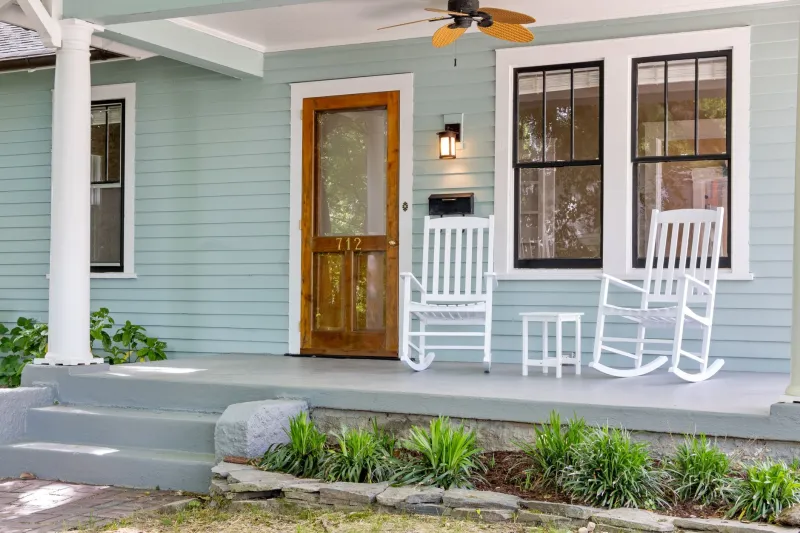
Sit a Spell: How the Front Porch Became America's Unlikely Comeback for Real Human Connection
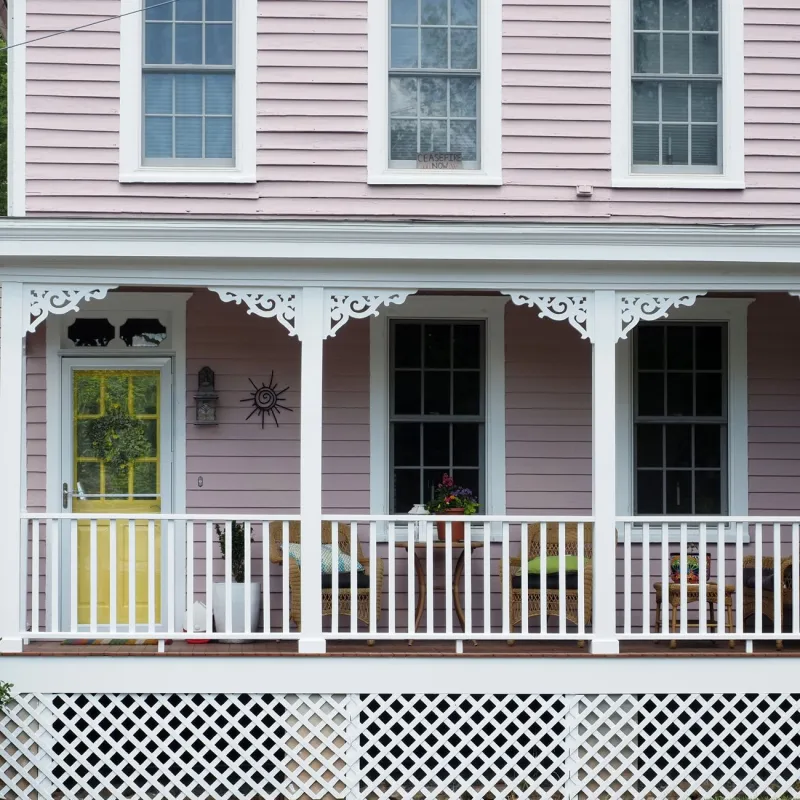
Sit a Spell: How the Front Porch Became America's Unlikely Comeback for Real Human Connection
There's a house two blocks from where I grew up that had the most incredible front porch. Wide, wraparound, painted a deep forest green. The older couple who lived there — the Hendersons — seemed to be out there constantly. Morning coffee. Evening sweet tea. They waved at every single person who walked by. They knew the mail carrier's kids' names. They knew when the young couple down the street was expecting. They just... knew things, because they were present.
I didn't fully understand what that porch represented until it was gone — sold, renovated, swallowed up into an extended living room with a big bay window that nobody ever sits near.
That porch was a portal. And we closed it.
The Golden Age Nobody Talks About
American porch culture has roots that run surprisingly deep. Through the late 1800s and well into the mid-20th century, the front porch was essentially the social infrastructure of everyday life. Before air conditioning made staying inside comfortable, before television gave us a reason to, and before suburban sprawl pushed houses back from the street — people lived outward.
Architecturally, Victorian and Craftsman-style homes were almost always designed with generous front porches as a central feature. These weren't decorative. They were functional gathering spaces where neighbors exchanged news, kids played within eyesight of adults, and the boundary between private life and public community was intentionally soft.
Social historians often point to the post-WWII housing boom as the turning point. As developers raced to build affordable homes for returning veterans and their growing families, the porch got value-engineered out of existence. Square footage moved inward. Garages moved forward. Backyards became the new "outdoor space" — private, enclosed, separated from the street. The design itself sent a message: community is optional now.
And quietly, without anyone really deciding it, we took the message to heart.
How Suburban Design Quietly Did the Damage
It's worth saying clearly: nobody set out to make America lonelier. The cul-de-sac wasn't invented as a social experiment. The two-car garage wasn't a manifesto. But the cumulative effect of these design choices reshaped how Americans relate to their neighbors in ways we're still untangling.
When your front door is set back 40 feet from the sidewalk, behind a lawn you mostly drive past, the casual spontaneity of porch life becomes nearly impossible. There's no natural moment for a neighbor to pause and chat. There's no visual signal that says I'm here, I'm open, come say hello. The architecture itself communicates closure.
And then we added phones. And streaming services. And grocery delivery. And suddenly, leaving the house at all started to feel optional on a lot of days.
The result? Study after study now confirms what most of us feel in our bones: Americans are lonelier than ever. The U.S. Surgeon General declared loneliness a public health epidemic in 2023. Nearly half of adults report feeling measurably isolated. And the communities hit hardest aren't necessarily the most rural or the most urban — they're often the most suburban, the places specifically designed around privacy and separation.
The Porch People Who Are Pushing Back
But here's the part that genuinely gives me hope: people are noticing. And they're doing something wonderfully, almost stubbornly simple about it.
Across the country, a loose but growing movement of homeowners, renters, and community advocates are intentionally rebuilding their lives around front porch presence. They're not waiting for their neighborhood to change. They're sitting down, pouring a drink, and being visible.
In Richmond, Virginia, a woman named Dara started hosting what she calls "Porch Fridays" — no invitations, no agenda, just a standing open-door policy every Friday evening from five to seven. She sets out a few extra chairs. She makes a pitcher of something cold. Within three months, she'd met more neighbors than she had in the previous four years of living in her house.
"I thought I needed to plan something," she told a local community blog. "But all I really needed to do was show up consistently in a visible place. The porch does the rest."
In Portland, Oregon, a neighborhood association started a "Front Porch Project" that offers small grants for residents to add or restore porch seating to their homes, specifically framing it as a public health and community resilience initiative. The waitlist has grown every year.
And in smaller towns across the South and Midwest — places where porch culture never fully disappeared — younger generations are consciously staying with the tradition rather than trading it for the backyard-and-privacy model their peers often choose.
Why It Works (And Why It's Easier Than You Think)
The beautiful thing about a front porch as a wellness tool is how low-effort it actually is. You don't need a program. You don't need a group chat. You don't need to organize anything.
You just need to be outside, facing the street, often enough that people start to expect you.
That consistency is the key. Researchers who study community formation talk a lot about what they call "passive contact" — the kind of low-stakes repeated exposure that builds familiarity and, eventually, genuine warmth. A neighbor you've waved to fifteen times feels like a neighbor. A stranger you've never seen feels like exactly that.
The porch creates passive contact almost automatically. You sit. People walk by. You wave. They wave back. One day, someone slows down. Then they stop. Then you learn their dog's name. Then their name. Then one day you're the person who notices when their lights haven't been on in a few days.
That's not nothing. That's actually everything.
And from a personal wellness standpoint, the benefits stack up fast. Time outside — even just 20 or 30 minutes — has measurable effects on stress and mood. The gentle social stimulation of casual neighbor interaction gives your nervous system just enough connection to feel less depleted. And the ritual itself, the act of having a regular, unhurried space in your day that belongs to nothing in particular, is a quiet form of self-care most of us are desperately missing.
Making It Yours
You don't need a wraparound Victorian porch to start. A stoop works. A small balcony works. Even a couple of chairs at the edge of your driveway works, if that's what you've got.
The point isn't the architecture. It's the intention.
Decide you're going to be visible. Decide you're going to be the neighbor who waves. Bring your coffee outside in the morning instead of drinking it over your phone at the kitchen counter. Sit out on a Tuesday evening with nothing to do but watch the street. Let yourself be bored in the best possible way.
Bring a second chair. Leave it empty. See what happens.
The Hendersons didn't build their neighborhood from some grand plan. They just sat on their porch every single day and let the world come to them. And it did — because it always does, when you give it a place to land.
Maybe it's time to give yours one too.