The Kitchen Everyone Ends Up In: How to Make Your Home the Heart of Your Community
You Know the One
Every town has one. Every friend group, every neighborhood, every extended family — somewhere in that web of people, there's a house. Maybe it's your aunt's place with the screen door that never quite latches. Maybe it's your college roommate's apartment where the kitchen table seats eight but somehow twelve people always fit. Maybe it's the neighbor down the street whose porch light stays on until eleven.
You don't need a formal invitation to go there. You just... go. And when you arrive, something in your shoulders drops. You feel it before you even sit down.
Psychologists have a phrase for what that place offers: a secure base. It's the same concept that attachment researchers use to describe what a loving caregiver gives a child — a foundation safe enough that you can go out into the world and actually take risks, knowing there's somewhere to return to. As adults, we need that just as much. We just stop expecting to find it.
But some people create it anyway, almost instinctively. And the rest of us? We can learn.
What Makes a Space Feel Like a Soft Landing
It's tempting to think it's about aesthetics — the cozy throw blankets, the farmhouse table, the candles. And sure, those things don't hurt. But walk into enough genuinely welcoming homes and you start to notice it's rarely about the decor. It's about the energy of permission.
Permission to show up as you are. Permission to be hungry, or tired, or mid-crisis. Permission to sit in the corner and say nothing, or to talk for three hours straight about something that's been eating at you.
Research in social psychology consistently points to a few key ingredients that make spaces — and the people who inhabit them — feel psychologically safe:
Predictability. Welcoming homes have a kind of reliable rhythm. There's always food. The host is genuinely glad to see you. You know what to expect, and that consistency is deeply calming in a world that often feels chaotic.
Non-judgment. The person who holds that space has a particular gift: they don't make you feel like a burden. They don't clock your bad haircut or your messy divorce or the fact that you cried in the car on the way over. They just hand you a drink and say, sit down, tell me everything.
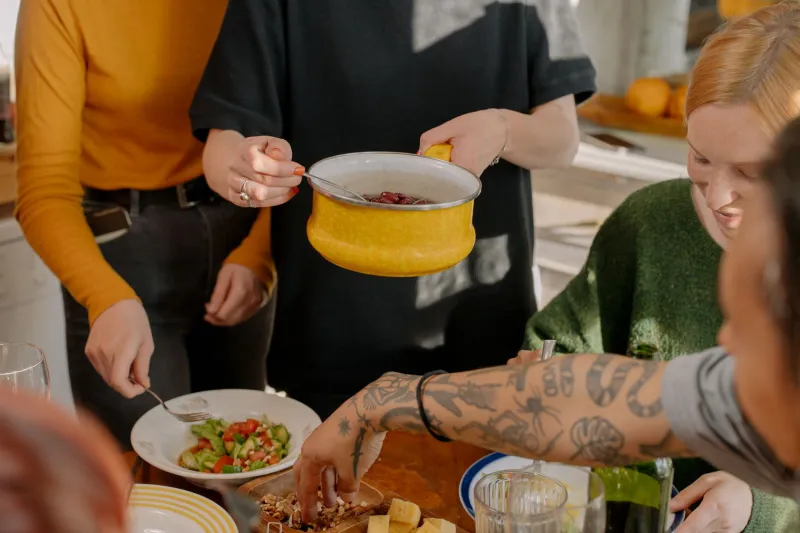
Shared ritual. American community traditions are full of these — the Sunday potluck, the neighbor who always fires up the grill on the Fourth of July, the family that does a big soup dinner every first snowfall. Ritual creates belonging. It says: you are expected here. There is a place set for you.
The Open-Door Tradition (And Why We Let It Slip)
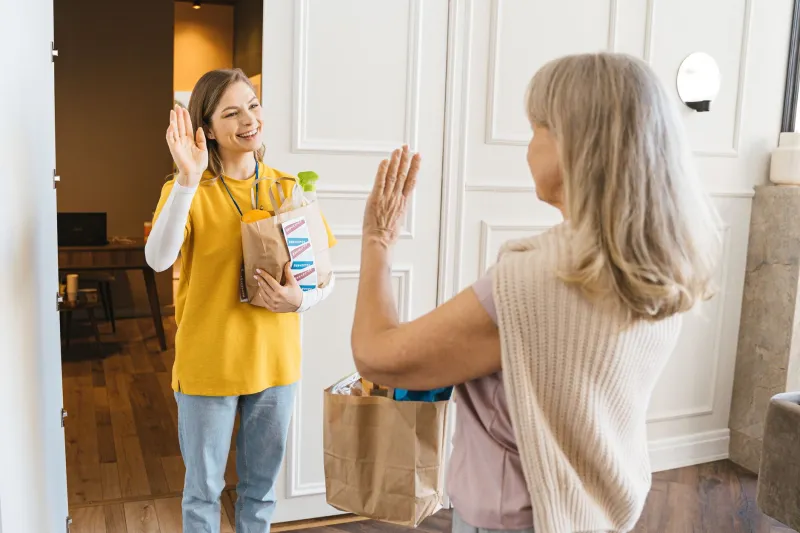
There was a time in American life — not so long ago — when the open-door policy was just called being a neighbor. People dropped by. Kids ran between houses freely. You borrowed a cup of sugar and stayed for an hour.
We've largely lost that, and the reasons are understandable: longer work hours, busier schedules, the rise of the curated social media visit where everything has to look perfect before guests arrive. We've started treating hospitality like a performance instead of a practice.
The homes that still function as community anchors are the ones where the host never got that memo — or consciously rejected it. They're not worried about the dishes in the sink. They're not apologizing for the dog hair on the couch. They've decided, somewhere along the way, that people matter more than presentation.
That shift in mindset is the whole ballgame.
How to Cultivate That Welcoming Energy — Starting Now
Here's the good news: you don't need a big house, a talent for cooking, or an extroverted personality to become someone whose home feels like a refuge. You need intention, and a few small habits practiced consistently.
Lower the bar for entry. Stop waiting until your home is guest-ready. Invite people over on a Tuesday for leftover soup. Text a friend and say, I'm just going to be home tonight, come by if you want. The more casual the invitation, the more genuinely welcoming it feels.
Have something to offer, always. It doesn't have to be elaborate. A pot of coffee. A bowl of fruit. A spare blanket. These small acts of provision signal that you were thinking about comfort — that you anticipated someone else's needs. That's the essence of hospitality.
Create a ritual and protect it. Pick something small and repeatable. A monthly potluck where everyone brings whatever they feel like making. A standing Sunday morning where the door is open and the waffles are on. Neighborhood porch nights in the summer. Ritual builds anticipation and belonging at the same time.
Be the person who remembers. The hosts of truly welcoming homes are almost always the ones who remember: your sister's surgery, your job interview, the anniversary that still stings. A quick text, a card on the counter, a mention when you walk in the door — these tiny acts of memory say you matter here. That's what keeps people coming back.
Let people help. Counterintuitively, welcoming spaces aren't always run by martyrs who do everything themselves. The best gatherings are ones where someone naturally gravitates to the kitchen to help with dishes, where the guest who arrives early gets handed a cutting board. Participation creates ownership, and ownership creates belonging.
Your Home Doesn't Have to Be Everyone's — Just Someone's
Here's a gentle reframe if all of this feels overwhelming: you don't need to be the hub for your entire zip code. You just need to be a soft place to land for someone. One friend who knows they can show up when things fall apart. One family member who always has a key. One neighbor who knows the porch light means come on up.
Community isn't built in grand gestures. It's built in the accumulation of small, consistent signals that say: you are welcome here. You are safe here. You don't have to have it together to walk through this door.
That's the hug that lasts — the one built into the walls of a place where people feel known.
So maybe start small this week. Put the coffee on. Leave the door unlocked a little longer. And see who shows up.