We Used to Know Our Neighbors by Name: The Quiet Story of How American Streets Went Silent
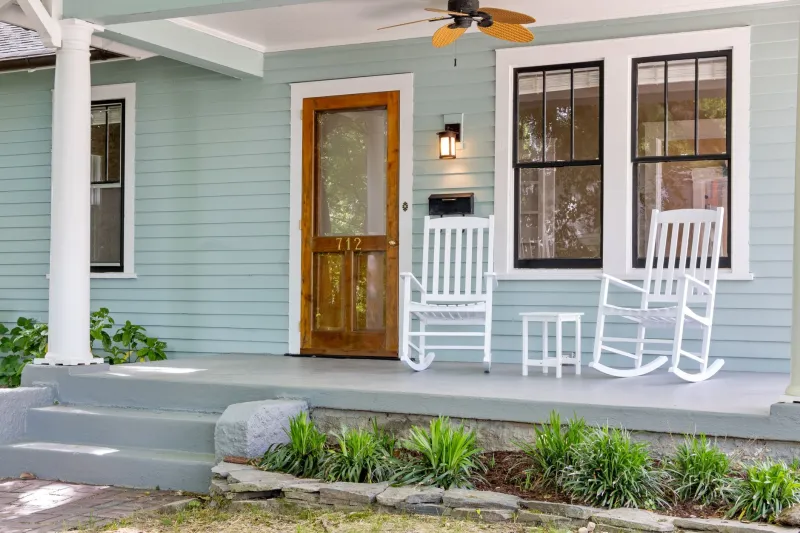
There's a particular kind of loneliness that doesn't have a name yet. It's not the loneliness of being far from family, or the ache of a friendship that faded. It's the loneliness of sitting inside your house, knowing that dozens of people live within shouting distance of you — and realizing you couldn't pick most of them out of a lineup.
If you've ever felt that, you're not imagining it. And you're definitely not alone.
Something real changed in how American neighborhoods were built and lived in over the past half-century. The front porch — that simple, unhurried strip of covered space between your front door and the rest of the world — used to be one of the most powerful community-building tools we had. And somewhere along the way, we quietly gave it up.
What the Front Porch Actually Was
Before air conditioning, before streaming services, before the backyard became a private sanctuary, the front porch was where American life happened. People sat out in the evenings. They waved to neighbors walking dogs. They called out to kids riding bikes. They had the same three-minute conversation with the mail carrier every single day, and somehow that mattered.
It wasn't about being extroverted. It wasn't about hosting or entertaining. It was about visibility — the simple, low-stakes act of being present in your neighborhood in a way that other people could see and respond to. Porches created what urban designers sometimes call "eyes on the street," but what most of us would just call knowing who lives nearby.
In towns across the American South and Midwest especially, porch culture wasn't a design trend. It was just life. Screen doors, rocking chairs, sweet tea, the news of the block exchanged in fragments over the course of a slow summer evening. It sounds almost quaint now. But what it was building, quietly and consistently, was belonging.
How We Ended Up Here
The shift didn't happen overnight, and it wasn't anyone's fault exactly. It was a whole constellation of changes that each made sense individually, even as they added up to something we're still reckoning with.
Post-WWII suburban development prioritized the car above almost everything else. Homes started being built with garages in the front and living spaces tucked further back. Driveways got longer. The front yard became more of a display — something you mow and mulch — than a place you actually inhabit. And the backyard became the new social space: private, fenced, yours.
Then came central air conditioning, which made staying inside genuinely comfortable for the first time. Then television. Then the internet. Each new technology gave us another reason to retreat inward, and our homes were increasingly designed to support that retreat. Open floor plans face the backyard. Living rooms face screens. The front of the house faces — well, the street, which nobody's really on anymore.
The result is neighborhoods where people technically live ten feet from each other and are functionally strangers. Where a neighbor can go through something hard — a loss, an illness, a rough patch — and the people on either side of them never know.
What We Actually Lost
This isn't just about nostalgia or aesthetics. Research on social connection consistently shows that weak-tie relationships — the casual, repeated interactions with acquaintances and neighbors — play a huge role in how safe, supported, and mentally healthy we feel. These aren't your best friends. They're the people you nod to, the ones whose names you know, the ones who notice if your car hasn't moved in a few days.
When those relationships disappear, something in our nervous systems registers the loss even if our conscious minds don't. We feel vaguely unsettled in our own neighborhoods. We're less likely to ask for help. We're more suspicious of the people around us. Loneliness rates in the US have been climbing for decades, and while screens get most of the blame, the physical design of our communities deserves some of it too.
We built places that make connection harder, and then we wondered why we feel disconnected.
Small Spaces, Big Shifts
Here's the hopeful part: you don't need to tear down your house and rebuild it with a wraparound porch. The spirit of porch culture is actually pretty portable. It's less about the architecture and more about the habit — the daily, low-effort choice to be slightly more visible and slightly more open to the people around you.
A few things that genuinely work:
Put a chair outside your front door. It sounds almost embarrassingly simple, but it changes things. If you have any kind of stoop, step, or small patch of front yard, a single chair signals that you're occasionally out there. And once you're out there, things happen. People walk by. Conversations start. It's not a grand gesture — it's just a door left slightly ajar.
Do your ordinary things outside when you can. Drink your morning coffee on the front step instead of at the kitchen counter. Fold laundry on the porch if you have one. Read on a blanket in the front yard. The activity doesn't matter. The visibility does.
Learn two or three names. Not everyone's. Just the people you already see regularly — the neighbor who walks their dog at 7am, the person whose kids play in the yard two houses down. Names change everything. Once you know someone's name, you're no longer strangers.
Wave first. This one is almost too small to mention, except that it works. A consistent, genuine wave to the same people over time builds something. It says: I see you. You're not invisible here.
Plant something at the edge of your property. A little garden, a few flower pots, a raised bed — anything that gives you a reason to be outside near the sidewalk semi-regularly. It also gives neighbors a low-stakes conversation starter. People will ask you about your tomatoes. Let them.
Reclaiming the Idea, Not Just the Space
The front porch was never really about the porch. It was about a shared understanding that your neighborhood was a place worth showing up for — that the people around you were worth a little of your time and attention, even on ordinary days.
We can rebuild that understanding without rebuilding our houses. It starts with small choices, made consistently, over time. A chair by the door. A name remembered. A wave across the driveway.
None of that sounds like much. But community has always been built from exactly these kinds of tiny, repeated moments. The porch just made them easier to stumble into.
Maybe the real project isn't bringing back the architecture. Maybe it's deciding, one small choice at a time, that the people who live near us are worth knowing — and then acting like it.