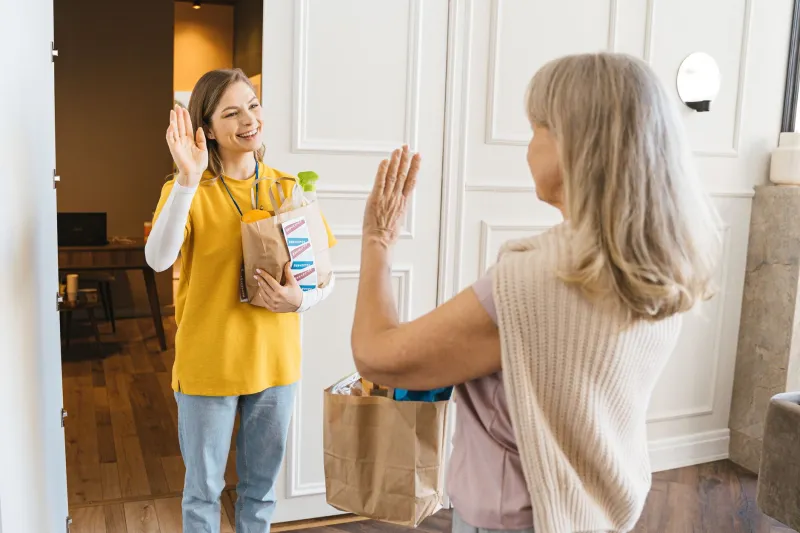
You Don't Have to Fix Anything: The Gentle Art of Being Someone People Actually Trust

You Don't Have to Fix Anything: The Gentle Art of Being Someone People Actually Trust
There's a particular kind of friend most of us have had at least once in our lives. Maybe you remember calling her on a Tuesday night, voice already cracking before you even got to the hard part. She didn't interrupt. She didn't immediately pivot to solutions. She just stayed there with you — in the mess, in the uncertainty — and somehow that was exactly enough.
That friend is what a lot of people call a "safe person." And while the phrase gets tossed around in wellness conversations, the actual practice of becoming one is something we rarely talk about in concrete terms. It's not about being a therapist. It's not about being endlessly available or emotionally bottomless. It's something quieter, more sustainable, and honestly more powerful than either of those things.
If you've ever wanted to be the kind of person your people genuinely lean on — not out of obligation, but because they actually feel held by you — this one's for you.
Why "Safe" Matters More Than "Supportive"
We throw around the word supportive a lot. Supportive sounds like showing up with a casserole after surgery or cheering someone on at a 5K. And those things are wonderful! But emotional safety is a different layer entirely.
Feeling emotionally safe with someone means you can say the imperfect, half-formed, maybe-embarrassing thing — and you genuinely believe they won't use it against you, won't minimize it, and won't make it weird later. That kind of trust is rare. And in a culture that's increasingly performative (hello, social media highlight reels), finding a space free from judgment feels almost radical.
Research consistently shows that perceived social support — specifically the belief that someone would be there if you needed them — is more protective against stress and anxiety than almost any other social factor. It's not even about how much support you actually receive. It's about knowing it exists. That's the invisible gift a safe person gives.
The Habit That Changes Everything: Listening Without an Agenda
Here's the honest truth: most of us listen in order to respond. We're mentally composing our reply, scanning our own experiences for something relatable to offer, or quietly deciding whether we agree with what's being said. None of that is malicious — it's just how human brains work.
But safe people train themselves to listen differently. They listen to understand, not to fix or redirect. This means letting silences breathe instead of rushing to fill them. It means asking one thoughtful follow-up question instead of launching into a five-point plan. It means resisting the pull to say "well, at least..." — one of the fastest ways to accidentally dismiss someone's pain.
A simple shift: next time a friend comes to you with something heavy, try asking, "Do you want to vent, or are you looking for input?" That one question does something remarkable. It signals that you see them as someone with agency over their own emotional needs, not a problem you need to solve.
Drop the Unsolicited Advice (Yes, Even the Good Advice)
This one stings a little, because most of us give unsolicited advice from a genuinely loving place. We see someone struggling and we want to hand them the key. But advice that wasn't asked for — no matter how spot-on — can actually make the person on the receiving end feel judged, incompetent, or like they've been heard only as a setup for your solution.
Safe people let others arrive at their own conclusions at their own pace. They trust that the person in front of them is capable. They might gently ask, "Would it help to think through some options together?" — but they wait for a yes before they start talking.
This is especially important in American social culture, where we're deeply conditioned to equate helpfulness with problem-solving. Sitting with someone in discomfort without trying to eliminate it can feel almost counterintuitive. But that's exactly where the magic lives.
Consistency Is the Currency of Trust
Big gestures get remembered, but it's the small, consistent ones that actually build trust over time. Sending a quick text to check in after a hard conversation. Remembering something they mentioned three weeks ago and circling back to it. Showing up when you said you would.
These micro-moments accumulate into something significant. They say, I was paying attention. You are not forgettable to me. In a world where everyone is overscheduled and distracted, that kind of intentional presence is genuinely extraordinary.
It also means being consistent with your reactions. If someone shares something vulnerable and you respond warmly, then later make an offhand comment that contradicts that warmth — even unintentionally — it creates a small fracture in the trust you've built. Safe people aren't perfect, but they're predictable in their care. That predictability is its own form of love.
Hold Confidences Like They're Precious (Because They Are)
Nothing unravels a sense of emotional safety faster than discovering that what you shared in private became someone else's story to tell. Even when it's framed as concern, even when no names are used — if someone finds out their vulnerability was passed along without permission, the damage is real and lasting.
Being a safe person means treating what people share with you as a gift, not as content. It doesn't get repeated at dinner parties or even mentioned in passing. It stays with you, held carefully, because you understand what it cost them to say it out loud in the first place.
The Ripple Effect Is Real
Here's something worth sitting with: when you become a safe person for even one or two people in your life, the effect doesn't stay contained. The friend who felt genuinely heard by you goes home and is a little more patient with her partner. The coworker who finally said the hard thing out loud feels lighter and shows up differently for his own kids. The neighbor who knocked on your door at the wrong time and you let in anyway — she starts paying it forward in ways neither of you will ever fully trace.
This is how community actually heals itself. Not through grand programs or viral campaigns, but through individual humans deciding to be a little safer, a little softer, a little more trustworthy with the people right in front of them.
You don't need a credential or a platform or a perfect track record. You just need the willingness to stay — without judgment, without agenda, without needing to be the one who fixed it.
That's the hug that doesn't require arms. And it matters more than you know.