Bring a Dish, Leave with a Family: Why the Potluck Is America's Most Underrated Wellness Practice
Bring a Dish, Leave with a Family: Why the Potluck Is America's Most Underrated Wellness Practice
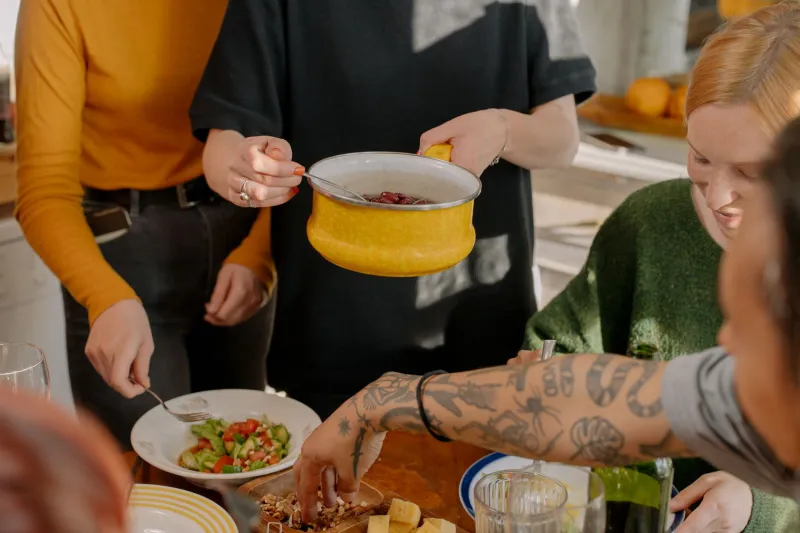
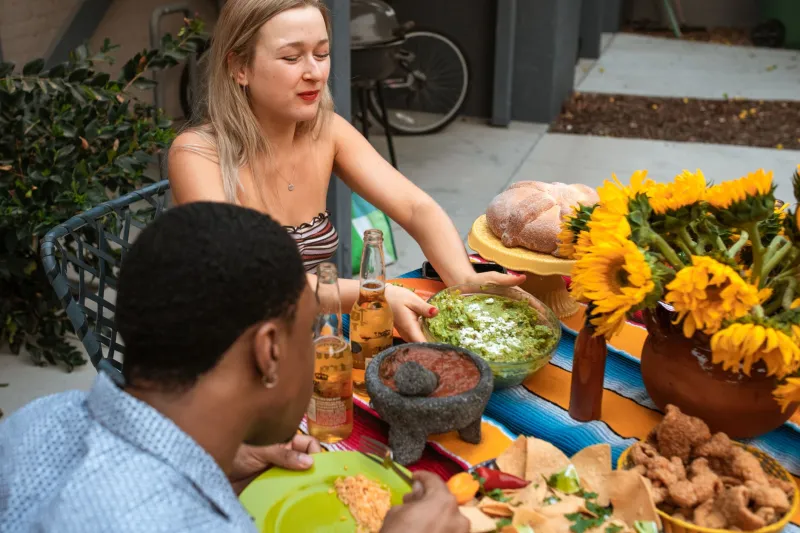
Let me paint you a picture. It's a Saturday afternoon, and someone's backyard is filling up. There's a folding table covered in mismatched serving spoons and dishes wrapped in foil. One person brought their grandmother's macaroni and cheese — the real kind, baked in the oven. Someone else carried over a slow cooker of pulled pork that's been going since six in the morning. There's a fruit salad, a suspicious-looking green bean casserole, and three different kinds of brownies.
Nobody catered this. Nobody placed an order. Every single thing on that table came out of someone's kitchen, made with someone's hands, for the specific purpose of feeding people they care about.
That, right there, is the potluck. And I'd argue it's one of the most quietly powerful acts of community left in America.
We Lost Something When We Stopped Cooking for Each Other
Somewhere along the way, we started outsourcing our gatherings. We book restaurants for birthdays. We order catering for celebrations. We Venmo someone for a pizza delivery and call it a party. And look — there's nothing wrong with any of that. Convenience is real. Life is busy.
But something gets lost when no one in the room made anything.
When you cook for someone, you're doing something that goes way beyond feeding them. You're spending time thinking about what they might enjoy. You're standing in your kitchen, sometimes for hours, putting actual effort into something that exists purely to bring another person pleasure. That's an act of love, whether you call it that or not.
The potluck takes that act and multiplies it across an entire community. Every dish on that table represents someone's time, someone's care, someone's willingness to be a little vulnerable. Because let's be honest — bringing homemade food to share is vulnerable. What if people don't like it? What if yours is the dish nobody touches? That tiny fear is actually what makes the whole thing matter.
The Vulnerability Baked Into Every Casserole
There's a reason potlucks feel different from other kinds of gatherings. When you bring something you made yourself, you're putting a small piece of yourself on that table. Your potato salad isn't just potato salad. It's the recipe your mom clipped from a magazine in 1987. It's the adjustment you made last summer when you ran out of mustard. It's yours.
Sharing that — especially with people you're still getting to know — takes a kind of low-key courage that we don't talk about enough.
And when someone comes back for seconds? When they ask for the recipe? When they say oh my gosh, what is in this? — that moment of connection is real. It's not manufactured. It's not a networking icebreaker. It's two people genuinely meeting each other through food.
Community researchers and social scientists have long pointed to shared meals as one of the most reliable predictors of social bonding. But the potluck adds an extra layer: the act of making something yourself, for others, deepens that bond in a way that simply showing up and eating together doesn't quite replicate.
Real Stories From Real Tables
Across the country, potlucks are quietly doing heavy lifting in communities that need it.
In neighborhoods where longtime residents and newer arrivals are still figuring out how to coexist, block parties built around bring-a-dish formats have become unexpected bridges. When your neighbor shows up with injera and lentil stew, and you show up with your family's peach cobbler, you're not just sharing food — you're sharing story. You're saying this is where I come from, and I want you to taste it.
Church suppers — a potluck tradition that goes back generations in communities across the South, the Midwest, and beyond — have seen renewed energy in recent years, with congregations using them specifically as a tool for re-knitting frayed social ties after years of isolation. Pastors and community leaders in places like rural Tennessee and suburban Ohio have talked about the potluck supper as their most effective outreach tool. Not a program. Not a formal event. Just: bring something, sit down, eat together.
And then there are the neighborhood potlucks that started during the pandemic and never stopped. People who'd lived next door to each other for years and barely waved began gathering monthly in driveways and cul-de-sacs, each person contributing something from their kitchen. Some of those groups are still meeting. Some of them have become genuine friendships — the kind where you check in on each other, where you notice when someone's light is off for too many days in a row.
Food did that. Homemade food, specifically.
Why the Potluck Is a Wellness Practice (Yes, Really)
We talk a lot about wellness in terms of what we do for ourselves — our morning routines, our movement practices, our sleep habits. And all of that matters. But there's a whole dimension of wellness that lives in our relationships, in our sense of belonging, in the feeling that we are known and that we matter to other people.
That kind of wellness doesn't come from an app. It comes from showing up.
The potluck, in its beautifully low-tech way, is one of the most effective delivery systems for that kind of belonging that I can think of. You have a reason to gather. You have something to contribute. You have built-in conversation starters (seriously, food is the greatest icebreaker in human history). And you leave having nourished other people and been nourished in return — physically and emotionally.
There's also something grounding about the act of cooking itself. Chopping vegetables, stirring a pot, following a recipe your aunt wrote on a notecard — these are slow, sensory, present-moment activities. In a world that moves at a relentless pace, spending two hours making a lasagna for a group of people you love is almost meditative. It's a way of saying: these people are worth my time. This matters enough to slow down for.
How to Start (or Restart) Your Own Potluck Tradition
You don't need a special occasion. You don't need a big group. You don't need a perfectly curated theme.
You need a date, a location, and a few people willing to cook something and show up.
Send a simple text or email. Pick a Saturday. Ask everyone to bring one dish — an appetizer, a main, a side, a dessert, whatever they feel like making. Keep the format loose. Keep the expectation low. The only rule is that it's homemade.
Then see what happens.
If your neighborhood feels a little distant, a potluck can start to change that. If your friend group has been doing the same restaurant rotation for years, a potluck can deepen those friendships in ways a prix fixe menu never will. If you've been feeling a little disconnected — from people, from community, from yourself — there is something about standing in your kitchen making food for other people that has a way of quietly setting things right.
The Table Is Always Big Enough
The potluck doesn't ask you to be perfect. It asks you to show up and bring something. That's it.
And in that simplicity, there's a kind of radical generosity. You made something. You carried it here. You're offering it to whoever wants it, no strings attached, no expectation of anything in return except maybe someone passing the serving spoon.
That's community. That's wellness. That's what Emma's Hug is all about.
So — what are you going to make?