She Just Knew: The Unsung Women Who Fed Small-Town America Through Every Crisis — and What Happens When They're Gone
She Just Knew: The Unsung Women Who Fed Small-Town America Through Every Crisis — and What Happens When They're Gone
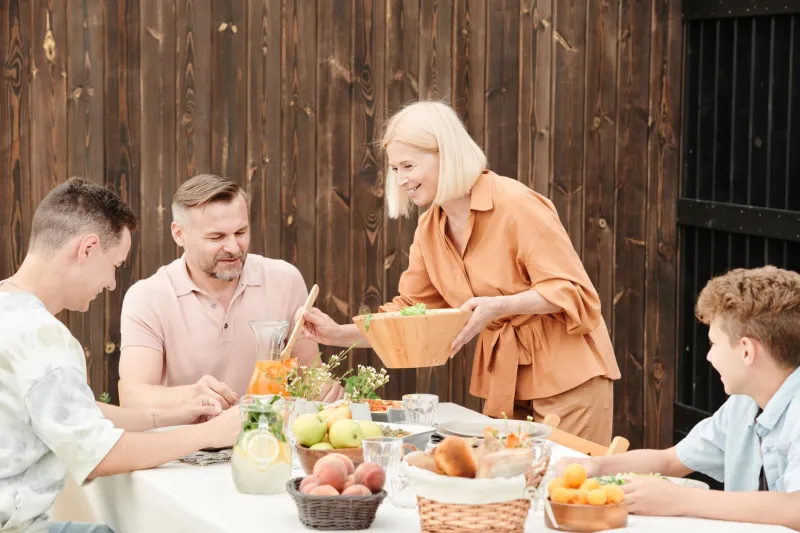
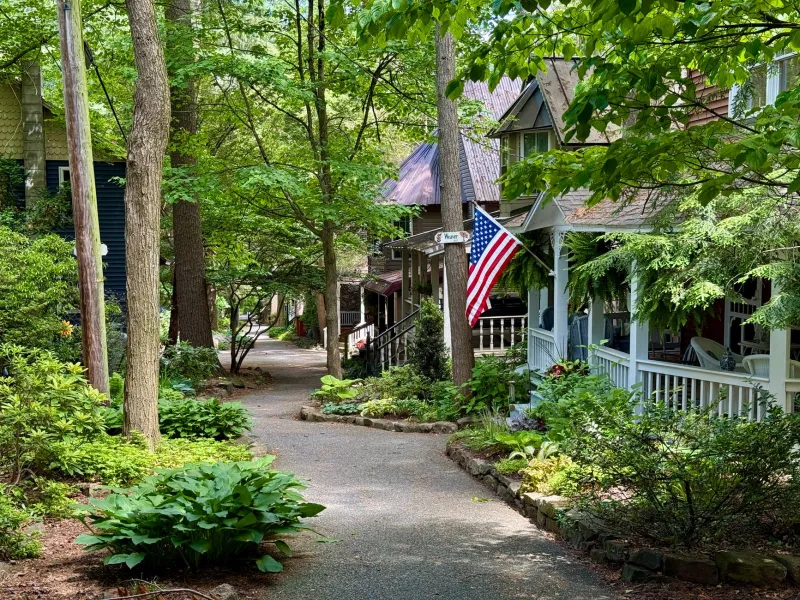
There was never a sign-up sheet. No group chat. No color-coded spreadsheet shared across a neighborhood Facebook page. In Harlan County, Kentucky, in Calhoun, Georgia, in the farm towns of central Nebraska — when someone's husband died, when a baby came too early, when cancer moved into the house down the road — the food simply arrived. Casseroles. Pound cakes. Foil-covered pans of chicken and rice still warm from the oven. And behind every single one of them was a woman who just knew.
This is the story of the casserole circuit — an invisible, unspoken, and almost entirely unrecognized system of mutual care that women in rural and small-town communities across America have maintained for generations. No app built it. No nonprofit funds it. No one gets a grant or a LinkedIn badge for running it. And right now, quietly and without much fanfare, it's fading — and taking something irreplaceable with it.
The Original Meal Train
Long before Silicon Valley decided to digitize neighborly kindness, American women were already running sophisticated grassroots care networks that would make any community organizer weep with admiration. The mechanics were simple but the intelligence behind them was anything but.
Word traveled through churches, beauty shops, and back-fence conversations. One woman heard that Ruth's mother had taken a fall. She told two others at choir practice. By the following Tuesday, Ruth's refrigerator was full for two weeks. Nobody asked who was bringing what. Somehow there were never three green bean casseroles and no dessert. Someone always remembered that Ruth's youngest didn't eat onions.
Historians who study domestic labor and women's informal economies have long noted that this kind of hyper-local caregiving network was one of the primary social safety mechanisms in pre-industrial and early industrial America. Before social workers, before food banks, before GoFundMe — there was this. A circle of women who tracked the health and hardship of their community the way a doctor tracks vitals, and who responded with the only currency most of them had in abundance: time, food, and presence.
Meet the Women Still Holding the Line
Darlene, 71, Sweetwater, Tennessee
Darlene has lived on the same road for her entire life. She raised four kids in the house her husband built, buried him in the church cemetery two miles away, and has never once considered leaving. She also hasn't let a neighbor face a hard week without a meal in over four decades.
"My mother did it, her mother did it," she says simply. "You don't think about it. You just do it." Darlene keeps a mental ledger — not of debts, but of needs. She knows which family is stretched thin after a medical bill. She knows who is grieving quietly. She knows when the new young couple on the end of the street looks like they haven't slept in a week. And she shows up, casserole in hand, without being asked.
Gloria and the "Tuesday Ladies," Pratt, Kansas
In a small city of fewer than seven thousand people in the heart of the Kansas plains, Gloria, 64, coordinates what she and her friends have always just called "checking in." The Tuesday Ladies — an informal group of eight women ranging in age from their mid-forties to their late seventies — rotate responsibility for keeping tabs on about thirty households in their extended community. Elderly neighbors living alone. Young mothers without family nearby. Families navigating addiction or mental illness.
"We're not social workers," Gloria is quick to clarify. "We're just neighbors. We call. We drop by. And we bring food because food says something words can't always say." The group has no official name, no budget, and no bylaws. It runs entirely on decades of friendship, shared values, and the deep understanding that caring for others is not optional — it's just what you do.
Mae, 58, Appalachian Ohio
Mae grew up watching her grandmother orchestrate what she now calls "the network" across a hollow in southeastern Ohio where poverty has always been close and community has always been closer. Today Mae does the same, often driving thirty minutes each way to deliver a meal to someone who has no one else nearby. "People think rural means isolated," she says. "But we've always taken care of each other. That's the only reason any of us made it."
What Gets Lost When the Circuit Goes Dark
Here's the thing about informal care networks: they don't just deliver food. They deliver witness. When Darlene shows up at your door, she sees you. When the Tuesday Ladies call to check in, they notice if your voice sounds different than last week. These women aren't just filling refrigerators — they're filling the enormous emotional gap that exists between crisis and formal help.
As small towns shrink, as younger generations move to cities, as the women who held these networks together age out of them without anyone stepping in to carry the tradition forward, entire communities are losing their most basic infrastructure of human care. And here's the painful irony: the formal systems that were supposed to replace informal community support — government programs, nonprofit services, tech-enabled platforms — often can't replicate the texture of what's lost. They can't replicate Mae knowing that you prefer your cornbread without jalapeños. They can't replicate Gloria noticing that you haven't answered your phone in three days. They can't replicate Darlene sitting on your porch for an hour after she drops off the food, not because she has to, but because she understands that sometimes the meal is just the excuse to show up.
Bringing It Home — Wherever Home Is
The beautiful thing about what these women built is that it doesn't require a small town, a church, or a lifetime of shared geography. It requires intention. It requires paying attention. It requires deciding that the people around you are your people, even if you've only lived near them for two years.
If you want to start your own version of the casserole circuit — whether you're in a suburban cul-de-sac or a city apartment building — here are a few places to begin:
- Start with one person. You don't need a network. You need one neighbor whose name you learn, whose life you pay a little attention to, and whom you show up for when things get hard.
- Make food a language. You don't have to be a great cook. A store-bought rotisserie chicken and a bag of salad still says I see you and I care.
- Remove the transaction. Don't bring a meal and wait for thanks. Don't keep score. The gift is in the giving.
- Tell the next generation. If you know a Darlene, a Gloria, a Mae — ask her to teach you. Ask her to tell you the stories. Write them down.
These women built something extraordinary out of nothing but love and attention. The least we can do is refuse to let it disappear on our watch.
At Emma's Hug, we believe community isn't something you find — it's something you make, one small, warm act at a time. If this story moved you, share it with someone who reminds you of Darlene. They'll know exactly what it means.