Forget the Grand Gesture: How Tiny, Consistent Acts of Kindness Are Building America's Strongest Communities
Forget the Grand Gesture: How Tiny, Consistent Acts of Kindness Are Building America's Strongest Communities
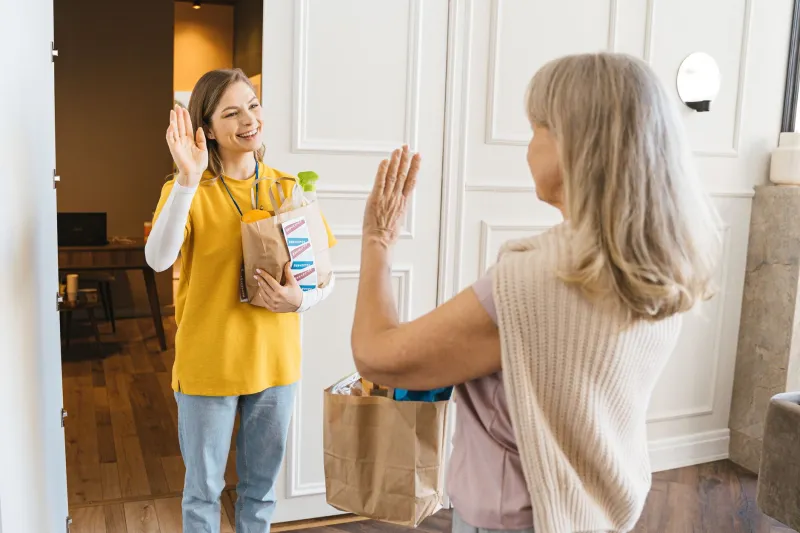
There's a woman in my neighborhood — let's call her Diane — who has never once thrown a block party. She hasn't organized a food drive or launched a community app. What she has done, every single week for the past four years, is left a small pot of soup on the porch of whoever on her street seems to be going through something hard. A new baby. A job loss. A bad cold. Just soup, a handwritten note, and zero expectation of anything in return.
Ask anyone on that block who they'd call in a real emergency, and Diane's name comes up every time.
That's the quiet power of consistency. And honestly? It's something I think about a lot here at Emma's Hug, because it sits right at the heart of everything this community is built on.
 Photo: Emma's Hug, via dynamic-media-cdn.tripadvisor.com
Why We Overestimate the Big Moment
We're kind of wired to be dazzled by the dramatic. A surprise party, a GoFundMe that goes viral, a neighbor who shovels your entire driveway after a blizzard — these things feel meaningful because they look meaningful. They're visible. Shareable. Easy to point to.
But behavioral psychologists have been quietly making the case for something different for decades. Research on relationship satisfaction consistently shows that it's not the intensity of positive interactions that predicts closeness — it's the frequency. A 2020 study out of the University of Kansas found that people who checked in with friends regularly, even briefly, reported significantly higher feelings of social connection than those who saved their energy for occasional, elaborate get-togethers.
 Photo: University of Kansas, via cdn.vox-cdn.com
In other words, a quick "Hey, thinking of you" text on a random Tuesday does more relational heavy lifting than a perfectly planned dinner party you host once a year.
This isn't just true for friendships. It scales up to entire neighborhoods and communities.
The Compound Interest of Caring
Think of small acts of kindness the way you'd think about compound interest. One kind gesture? Nice. Easy to forget. But the same gesture, repeated over weeks and months? That builds something real. It builds trust.
Trust is the actual currency of community. It's what makes people feel safe enough to ask for help, to be honest about what they're going through, to show up imperfectly without fear of judgment. And trust isn't built in a single conversation — it's built through a pattern of behavior that says, I see you, and I'm still here.
Take Marcus, a 38-year-old teacher in Columbus, Ohio, who told me he accidentally built one of the closest friend groups of his adult life through what he calls his "two-minute rule." Every morning, he sends one personal message to someone in his orbit — not a mass meme, not a group chat reply, but a specific, individual note. Sometimes it's a compliment on something they posted. Sometimes it's a memory he thought of. Sometimes it's just "you've been on my mind."
 Photo: Columbus, Ohio, via www.cazin.net
"It takes two minutes," he said. "But three years in, I have people who would drop everything for me. And I would for them. That's not an accident."
What 'Showing Up' Actually Looks Like
Here's where I want to gently push back on the idea that showing up has to look a certain way. It doesn't have to be homemade soup (though, honestly, soup is never wrong). It doesn't have to cost money or take hours. It just has to be real and repeated.
Some of the most community-building acts are almost embarrassingly simple:
- The check-in text. Not "let's hang soon" (which we both know might never happen), but "I know you had that hard conversation with your mom — how did it go?"
- The genuine, specific compliment. Not "you look great" but "the way you handled that situation last week showed so much grace — I really admire that about you."
- Remembering the small stuff. Following up on something someone mentioned in passing — a job interview, a doctor's appointment, a first day of school — communicates that you were actually listening.
- Showing up in person, imperfectly. Dropping by with coffee even though your hair isn't done and you only have 20 minutes. Presence, even partial presence, matters.
- Making someone feel seen publicly. A comment on a friend's post that goes beyond an emoji. A shoutout that's specific and sincere.
None of these require a grand plan. They require attention and follow-through.
A Simple Framework to Start This Week
If you want to start weaving more intentional connection into your life, here's a low-pressure framework I love — I call it the 3-1-1 approach:
3 check-ins per week. Choose three people in your existing circle and reach out with something specific and personal. Rotate through your contacts so no one feels forgotten.
1 in-person moment. Commit to one face-to-face interaction per week that's purely about connection — not productivity, not obligation. Coffee, a walk, sitting on the porch. It counts even if it's short.
1 community act. Once a week, do something that extends beyond your immediate friend group. Wave at a neighbor. Compliment a stranger sincerely. Leave a kind note for your mail carrier. These micro-moments are how community culture actually shifts over time.
The key is consistency over perfection. You will miss weeks. Life gets chaotic — that's just real. The goal isn't a flawless streak; it's a general pattern of showing up that, over time, becomes part of who you are.
The Ripple You Don't Always See
Here's the thing that gets me every time: most of us will never fully know the impact of our small, consistent acts. We won't see the moment our text arrived on a day someone really needed it. We won't know that the neighbor we waved at every morning started waving back because it was the only friendly face they saw all day.
But that doesn't make it less real. If anything, it makes it more meaningful — because you're not doing it for the recognition. You're doing it because you genuinely believe that people deserve to feel seen and cared for, even in the most ordinary moments.
That's what Emma's Hug is really about, at its core. Not the perfect wellness routine or the curated highlight reel — but the real, warm, sometimes messy act of reaching out and saying: I'm here. You matter. Let's keep going together.
Diane and her soup? She's not trying to be a community hero. She's just decided that showing up, week after week, is worth it.
I think she's onto something. And I think you probably are too.