Feed First, Ask Later: The Hospitality Rule Your Grandmother Never Had to Write Down
The Pot Was Always On
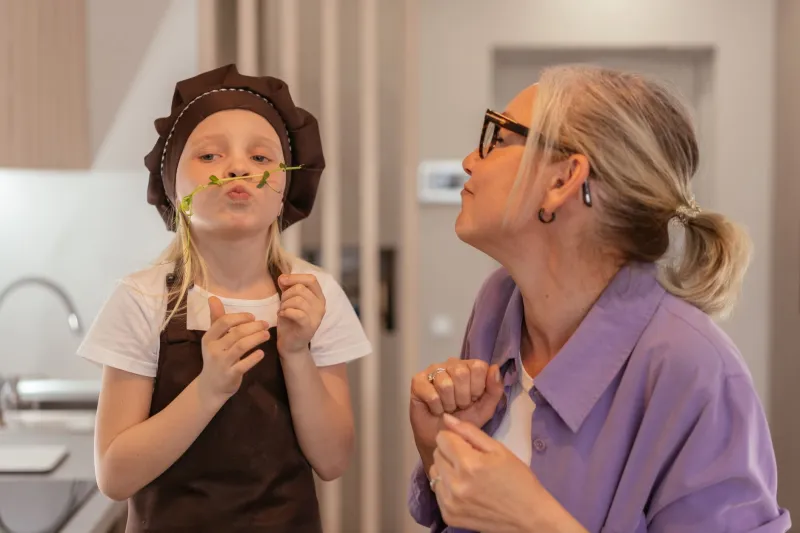
If you grew up with a grandmother who kept a real kitchen, you know the feeling. You'd walk in the back door without knocking, and before you'd even set your bag down, something was being put in front of you. A plate. A bowl. A cup of something hot. Nobody asked if you were hungry. Nobody checked if you had dietary preferences. The assumption was simple: you are here, therefore you will eat.
That assumption — so obvious to one generation, so foreign to the next — was the invisible architecture of American hospitality for most of this country's history. And somewhere along the way, quietly and without anyone really deciding to, we let it go.
What replaced it? Mostly logistics. Texts sent three days in advance. Dietary questionnaires. The polite "oh, we already ate" that both parties pretend to believe. A whole choreography of coordination that, however considerate it tries to be, has accidentally drained the spontaneity and warmth right out of the act of feeding people.
What Those Old Kitchen Rules Were Actually About
The unwritten hospitality codes of older generations weren't really about food. They were about a fundamental stance toward other people — a presumption of welcome that didn't require an invitation because the welcome was simply always extended.
In the South, you didn't let someone leave your property hungry. In Italian-American households, refusing a second helping was practically an act of aggression. In many Black American family traditions, the kitchen was the first room that said this is a safe place before a single word was spoken. In Midwestern farmhouses, the coffee was always on because you never knew when a neighbor might need to sit down for a minute.
These weren't just customs. They were community infrastructure. They created a texture of daily life in which people felt genuinely welcome in each other's spaces — not as guests who needed to be accommodated, but as people who simply belonged.
The difference between those two things is enormous, even if it's hard to articulate. One requires effort. The other requires only an open door.
When We Started Asking Permission to Be Generous
Something shifted — gradually, then all at once — in how Americans think about hospitality. Part of it is the pace of modern life, which made the idea of someone just showing up feel intrusive rather than lovely. Part of it is the atomization of neighborhoods, where we genuinely don't know our neighbors well enough to feel comfortable feeding them unannounced.
Part of it, too, is a kind of hospitality perfectionism that social media quietly installed in us. If you're going to have people over, the house should be ready, the food should be worthy of a photo, the whole experience should feel curated and intentional. Which means it almost never happens, because life is rarely curated or ready.
Your grandmother didn't have that problem. Her kitchen was always a little messy. The food was whatever was in the pot. And somehow, everyone who sat at that table remembers it as one of the best meals they ever had.
Reclaiming the Open-Door Kitchen
Reclaiming this doesn't mean abandoning consideration for others. It means shifting the default.
The old rule wasn't "feed people without caring what they need." It was "assume people are welcome here, and figure out the details from a position of warmth rather than a position of logistics." Those are very different starting points.
In practical terms, it looks like this: keeping your kitchen stocked not just for yourself, but with the quiet knowledge that someone might come through. Having a pot of something simple that could stretch to feed one more without drama. Saying "come over" and meaning it, without needing two weeks' notice and a clean house.
It looks like what some communities are already doing — neighborhood potlucks where the only rule is to bring something, anything; community refrigerators stocked by residents for anyone who needs; church halls where Sunday means a table and a seat for whoever walks in.
In Nashville, a group of women has started what they call "open porch Sundays" — no invitation required, just a standing offer that the porch will be set with food every Sunday afternoon. In Philadelphia, a neighborhood Facebook group has revived the tradition of leaving extra food on front stoops with a simple handwritten note: take what you need.
What Happens to a Neighborhood When the Pot Is Always On
Here's what those older generations understood intuitively and what researchers are now confirming: food is one of the most powerful builders of social trust that exists.
When people know they can show up somewhere and be fed, they show up. And when they show up, relationships form. And when relationships form, neighborhoods stop being collections of strangers and start being something more like what we actually need them to be.
The communities with the strongest social fabric — the ones where people look out for each other, notice when someone hasn't been seen in a few days, show up when things go wrong — tend to be the ones where food still moves freely between households. Where you know what your neighbor's chili smells like. Where someone has a key to your kitchen and knows where you keep the good mugs.
That's not nostalgia. That's a blueprint.
Start With One Pot
You don't have to overhaul your whole life to bring this back. You just have to make one pot of something this week and tell someone it's there.
Text a neighbor. Tell a friend to stop by without warning. Leave something on a porch. Invite someone in and feed them before they can say they're not hungry.
Let your home be the kind of place where the answer to "can I come over?" is always yes, and where the pot is always, at least a little bit, on.
Your grandmother never had to think twice about it. Maybe that's the whole lesson.