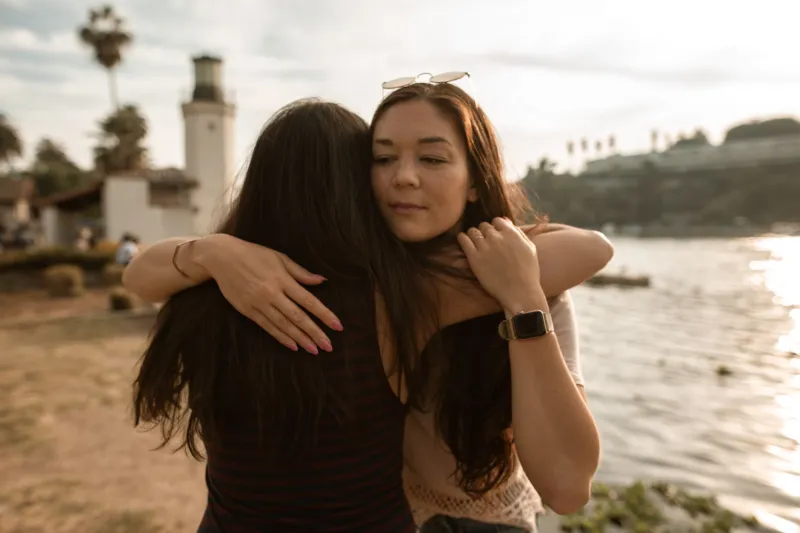
Touched Out or Touch-Starved? The Quiet Crisis Reshaping How Americans Connect
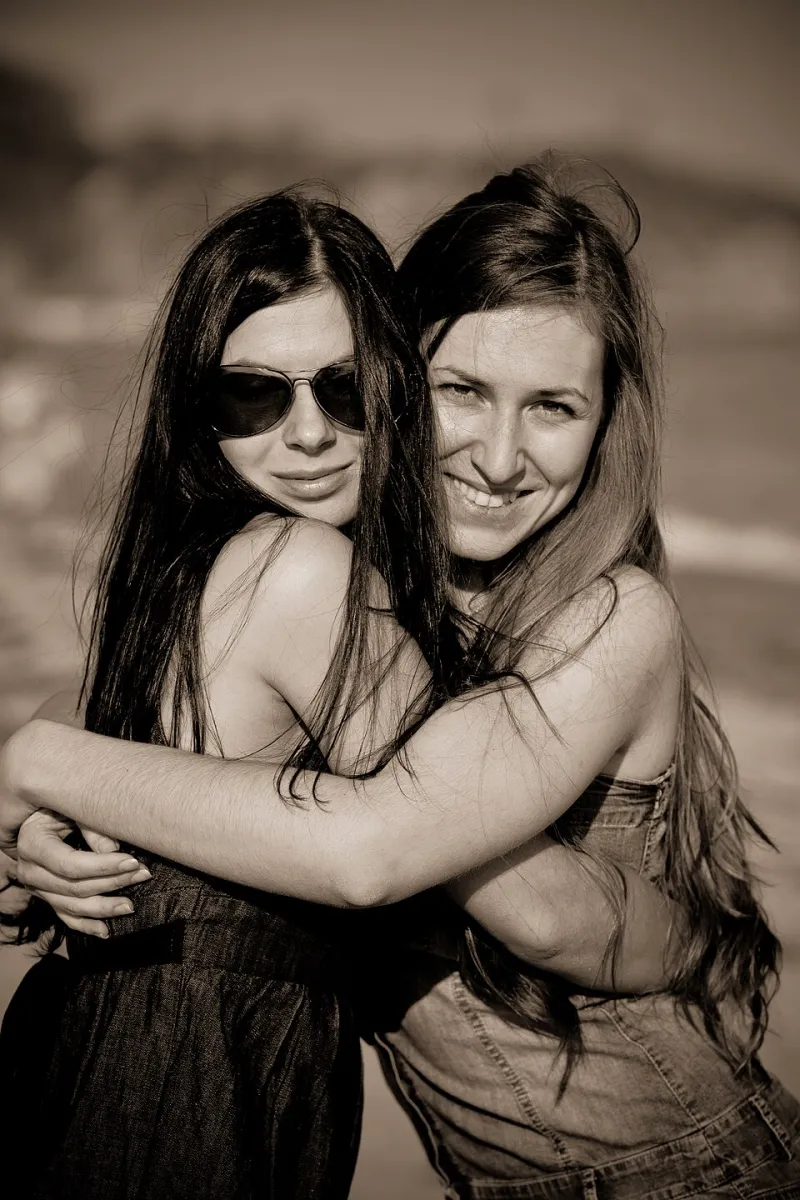
Photo: Fedor Leukhin, CC BY-SA 2.0, via Wikimedia Commons
When Did a Hug Become Complicated?
There's a moment a lot of us can probably remember — maybe at a work event, or meeting a friend's new partner, or greeting a neighbor after a long absence — where we froze. Do I hug this person? Is that okay? Do they want that? We extended a hand. Or gave an awkward side-pat. Or just... didn't.
It seems like a small thing. But multiply that moment by millions of interactions across a country of 330 million people, and you start to see something that researchers have been quietly documenting for years: Americans are touch-starved. And the deficit is growing.
This isn't about romance or intimacy in the narrow sense. It's about the casual, platonic, human-to-human physical contact that used to be woven into everyday life — the hand on the shoulder, the squeeze of a forearm, the real hug that lasts more than a half-second. The kind your grandmother gave that you could still feel an hour later.
What Your Nervous System Is Actually Asking For
Here's what the science keeps coming back to: human touch isn't a luxury. It's a biological need, as real as sleep or water.
When we experience warm, safe physical contact, our bodies release oxytocin — often called the "bonding hormone" — which lowers cortisol levels, reduces blood pressure, and signals to the brain that we are, fundamentally, not alone. Research from the Touch Research Institute at the University of Miami has linked regular positive touch to reduced anxiety, better immune function, and even lower rates of depression.
On the flip side, touch deprivation — what some researchers now call "skin hunger" — is associated with increased loneliness, heightened stress responses, and a kind of low-grade emotional dysregulation that's hard to name but very easy to feel. You just feel... off. Unmoored. Like something is missing but you can't quite say what.
For many Americans, especially those living alone, working remotely, or navigating post-pandemic social awkwardness, that feeling has become the background noise of daily life.
How We Got Here
This didn't happen all at once. It was a slow accumulation of cultural shifts, each one reasonable on its own, that together rewrote the unspoken rules of physical connection.
Liability culture made workplaces touch-free zones. Well-intentioned (and necessary) conversations about consent sometimes got translated into a broader social anxiety about touch in general. The pandemic added a layer of physical caution that, for many people, never fully lifted. And underneath all of it, an increasingly individualistic cultural narrative that prizes personal space and independence above almost everything else.
None of these forces are entirely wrong. Consent matters. Boundaries matter. But somewhere in the recalibration, we lost something — a whole vocabulary of everyday physical warmth that used to hold communities together without anyone having to think about it.
The Communities Pushing Back
Across the country, small but determined groups are working to reclaim that vocabulary.
Hug circles — structured, consent-forward gatherings where participants offer and receive platonic embraces — have been quietly growing in cities from Portland to Atlanta. They're not weird or fringe. They're full of teachers, nurses, retirees, and young professionals who simply recognized that they were running on empty and needed something their morning routine couldn't provide.
In therapeutic contexts, somatic practitioners and trauma-informed therapists are increasingly incorporating consensual touch into healing work, recognizing that some wounds live in the body and can only be reached there. Organizations like the Cuddle Party network have brought facilitated touch experiences into community spaces, always with clear consent protocols and trained facilitators.
Even in less formal settings, people are finding their way back. Churches and faith communities that maintained their hugging cultures through the pandemic are reporting that those physical rituals of greeting have taken on new weight — people linger a little longer, hold a little tighter.
Starting Where You Are
You don't need to join a hug circle to begin rebuilding your own touch life (though honestly, no judgment if you do). It starts smaller than that.
It starts with asking a close friend, "Are you a hugger?" and actually waiting for the answer. It starts with letting a hug last three full seconds instead of the obligatory one. Research suggests that three seconds is approximately the threshold at which oxytocin release kicks in — anything shorter is more social performance than genuine connection.
It starts with noticing when you're touch-starved yourself — that restless, edgy, slightly hollow feeling — and naming it honestly instead of reaching for your phone.
And it starts with giving yourself permission to want this. In a culture that has made physical connection feel fraught or embarrassing or somehow needy, that permission is actually the hardest part.
The Hug as a Radical Act
There's something quietly countercultural about insisting on warmth in a world that keeps telling us to keep our distance. About walking up to someone you love and holding on for a moment longer than feels strictly necessary.
It's not a grand gesture. It doesn't require a retreat or a subscription or a wellness app. It just requires two people willing to be present with each other in the most basic, ancient, human way possible.
That's what Emma's Hug is really about, when you get down to it. Not a brand. A posture. A choice to lean in rather than pull back. A reminder that we were never meant to do this alone — and that sometimes, the most healing thing in the world is simply being held.
So: who could you hug today? Really hug, the kind that counts?
Start there.