Skin Hunger Is Real: How America Lost Its Comfort in Touch — and the Communities Fighting to Get It Back
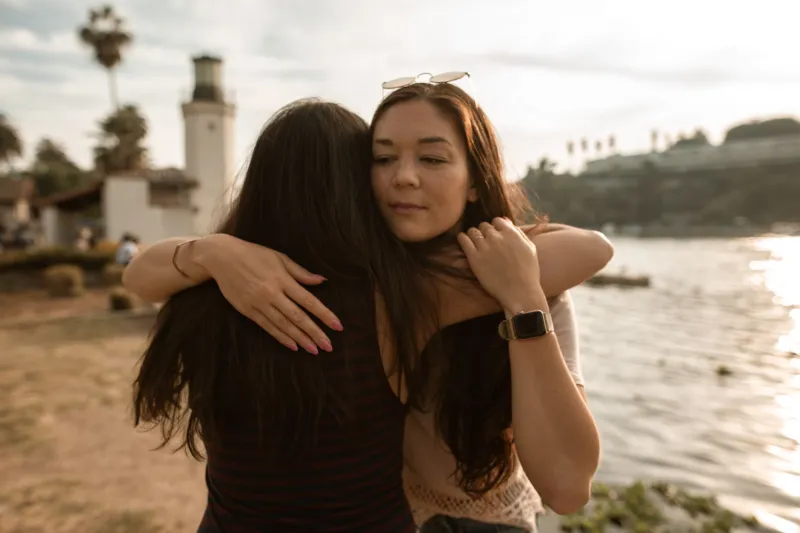
There's a moment most of us recognize now. Someone reaches in for a hug — a friend, a coworker, even a family member you haven't seen in months — and something in your body hesitates. Not because you don't want it. But because somewhere along the way, being hugged started to feel like something you had to think about.
That hesitation has a name. Researchers call it touch starvation, or more evocatively, skin hunger — a measurable physiological state that emerges when human beings go too long without meaningful physical contact. And according to therapists, social scientists, and community leaders across the country, a whole lot of us are living in it right now.
What Happens to Your Body When No One Touches You
Human touch isn't just emotionally comforting. It's biologically essential in ways that still surprise people when they hear them laid out plainly.
When someone you trust makes physical contact with you — a hand on the shoulder, a long hug, even a brief arm squeeze — your body releases oxytocin, the bonding hormone that lowers cortisol, slows heart rate, and signals to your nervous system that you're safe. Touch activates the vagus nerve, which plays a central role in regulating anxiety and mood. It can reduce the perception of pain. It literally changes your chemistry.
Conversely, prolonged touch deprivation is linked to increased anxiety, depression, disrupted sleep, and even compromised immune function. In infants, the research is stark — babies who aren't held enough fail to thrive in ways that go beyond emotional development. Adults aren't so different. We just get better at pretending we're fine.
"What the pandemic did," says therapist and somatic practitioner Dana Kellerman, based in Portland, Oregon, "is take a population that was already touch-deprived — because of screen culture, smaller families, more people living alone — and strip away whatever casual contact remained. A hand on the back from a colleague. A hug from a friend after dinner. Those micro-moments of contact were doing more work than most people realized."
The Pandemic Hangover Nobody Talks About
The COVID-19 pandemic didn't create America's touch problem. But it accelerated and deepened it in ways we're still untangling.
For nearly two years, physical closeness was reframed as danger. Hugging someone was an act with risk calculations attached. Even after restrictions lifted, the neural pathways that govern our comfort with proximity didn't simply reset. For many people — especially those who live alone, who are introverted, or who were already struggling socially — the withdrawal from physical contact calcified into a new normal.
"I had clients who came back to in-person sessions after the pandemic and literally didn't know how to greet me," says Dr. Marcus Webb, a licensed psychologist in Atlanta. "We'd been meeting on Zoom for eighteen months. The question of whether to shake hands, hug, or just wave felt paralyzing. That's not a small thing. That's a rupture in social fluency."
A 2021 survey by the American Psychological Association found that nearly half of adults reported feeling a persistent sense of disconnection from others even as public life reopened. Touch — or the absence of it — was consistently named as a contributing factor.
Communities Creating Space for Platonic Touch
Here's what's quietly remarkable: all over the country, people are choosing to do something about it.
In Minneapolis, a community wellness center called The Open Circle has been running what it calls "connection evenings" since 2022. These aren't therapy sessions or support groups in the traditional sense. They're facilitated gatherings where participants are guided through consent-based physical connection — shoulder rubs, hand-holding, group hugs — with clear communication norms and no pressure to participate in anything that feels uncomfortable.
"We had to fight a lot of assumptions when we started," admits Renata Sousa, one of the program's founders. "People assumed it was weird, or inappropriate, or that it was some kind of fringe thing. But we fill every session. We have a waitlist. That tells you something about how hungry people are."
In rural Tennessee, a faith community in Knoxville has formalized what its pastor calls a "greeting culture" — where every Sunday service begins with a genuine five-minute period of physical greeting between congregants. Not the perfunctory handshake-and-smile pass. A real moment. "We coach people to actually look at each other. To hold the hug a second longer than feels comfortable," says Pastor Elaine Marsh. "That extra beat is where connection actually happens."
Across the country, yoga studios, grief support groups, and even some corporate wellness programs are beginning to incorporate intentional touch into their frameworks — always with clear consent protocols and participant agency.
How to Rebuild Your Own Comfort With Touch
You don't need to join a facilitated cuddle circle to start reversing your touch deficit. (Though if that sounds good to you, no judgment here.)
Small, intentional steps work. Therapists suggest starting with people you already trust and simply being more deliberate about physical greetings. Linger in a hug instead of pulling away at the one-second mark. Reach out and touch a friend's arm when they're telling you something that matters. These gestures communicate presence in a way that words alone can't replicate.
If you live alone and don't have regular physical contact in your life, consider activities that normalize touch: a massage, a yoga class with hands-on adjustments, or even a pet. Research consistently shows that stroking an animal produces many of the same neurochemical effects as human touch.
And perhaps most importantly: name the awkwardness when it's there. "I've found that just saying 'I feel kind of weird about hugging again, but I really want to' dissolves the tension instantly," says Kellerman. "Permission and acknowledgment make everything easier."
A Hug Is Not a Small Thing
At Emma's Hug, we've always believed that physical warmth and emotional warmth aren't separate. They're the same impulse, expressed through different channels. The name of this space exists because a hug is one of the most complete forms of saying I see you, I'm here, you matter.
The fact that so many of us have lost easy access to that — or have grown unsure about how to offer it — is genuinely worth grieving. And then doing something about.
So the next time someone you love is within arm's reach, consider reaching. Hold on an extra second. Let your nervous system remember what it's supposed to feel like.
It turns out, your body already knows. It's just been waiting for permission.