Beyond Phone-Free Dinners: What the Family Table Is Actually Healing (and Why It's More Than You Think)
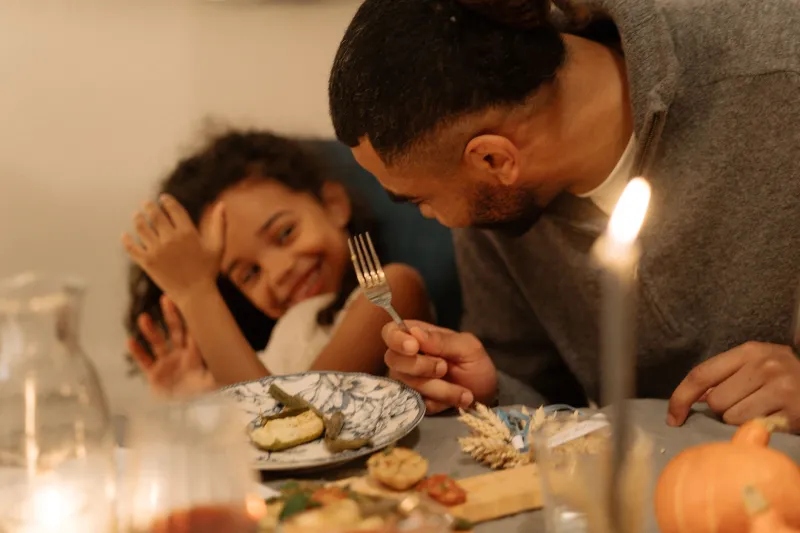
The Table Has Always Been the Thing
Somewhere along the way, we turned dinner into a logistics problem. Who's picking up what, who has practice at six, can we just do something quick tonight? The meal became a transaction — fuel delivery with a side of scheduling — and we barely noticed the shift happening.
But here's what's interesting: the dinner table never stopped being powerful. We just stopped paying attention to it.
When researchers study family resilience — the kind that helps kids bounce back from stress, that keeps couples connected through hard seasons, that gives adults a sense of being rooted somewhere — shared meals keep showing up as a significant factor. Not fancy meals. Not Instagram-worthy meals. Just regular dinners, eaten together, with enough time and intention to let something real happen.
So no, this isn't another article telling you to put your phone in a basket by the door. You already know that part. This is about what comes after the phones go away — and why that part matters so much more.
What's Actually Happening in Your Brain at the Dinner Table
When you sit down with people you love and share food, your nervous system starts doing something remarkable. The combination of physical warmth, familiar smells, rhythmic eating, and trusted voices creates what neuroscientists sometimes call a co-regulation environment. In plain terms: your body takes cues from the people around you, and when those people feel safe, your own stress response begins to dial down.
This is why dinner feels different from just being in the same house. Proximity isn't enough. It's the shared ritual — the passing of dishes, the small conversations, the laughter over something dumb that happened at work — that creates the biochemical conditions for genuine connection.
Oxytocin, often called the bonding hormone, gets released during shared meals in ways that parallel physical touch. Your cortisol levels — that's your stress hormone — tend to drop. For kids especially, this matters enormously. Studies from the National Center on Addiction and Substance Abuse found that teenagers who ate dinner with their families five or more times a week were significantly less likely to experience depression and anxiety than those who rarely shared meals at home.
But adults need it just as much. Maybe more, honestly, because we're less likely to admit it.
Why Silence at the Table Is Actually the Problem
Here's the thing nobody talks about: removing the phones doesn't automatically create connection. It just removes a distraction. What fills that space matters.
A lot of families sit down to a phone-free dinner and then... eat in silence, or talk about logistics, or let the TV fill the background. That's not a failure — it's just unfamiliar territory. We've gotten out of practice with the art of unhurried conversation, and it can feel awkward at first to just talk without a purpose or a to-do attached.
The families who seem to thrive at the dinner table aren't the ones who have the most interesting things to say. They're the ones who've built small rituals around the meal itself — ways of opening up conversation that feel low-pressure and even a little playful.
Some families use a simple question rotation. Nothing heavy: What's something that surprised you today? What made you laugh? If you could change one thing about tomorrow, what would it be? These aren't therapy prompts. They're just gentle invitations to be known a little better.
Other families have a tradition of sharing a "high and a low" — one good moment from the day, one hard one. It sounds simple, but over time, this practice builds something profound: the understanding that your table is a place where you can tell the truth about how things are going.
Unhurried Is the Secret Ingredient
One of the most underrated elements of a restorative family dinner is pace. We are a nation of rushed eaters — twelve-minute lunches, drive-through dinners, meals consumed while doing three other things. And that speed doesn't just affect digestion (though it does affect that too). It signals to everyone at the table that this moment is just a pit stop, not a destination.
Slowing down changes the whole experience. Lighting a candle helps. So does putting something on the table that requires a little ceremony — bread that needs to be broken, a sauce that gets passed around, even just cloth napkins instead of paper ones. These small rituals don't have to be precious or performative. They just create a subtle message: this meal is worth taking seriously.
Aim for at least twenty to thirty minutes at the table. Not eating for thirty minutes necessarily — just being there for that long. Let the conversation wind down naturally. Let someone get up to get seconds. Let the littlest kid tell the long, wandering story that doesn't really have a point. That is the point.
Practical Ways to Start This Week
You don't need a Pinterest-perfect tablescape or a four-course meal. Here are some genuinely doable ways to bring more intention to your family dinners without adding stress:
Light something. A candle, a string of warm lights, even just turning off the overhead and using a lamp nearby. Softer light literally relaxes the nervous system and signals transition from the busy part of the day.
Pick one conversation starter and keep it simple. Write a few on slips of paper and put them in a bowl. Let whoever sets the table pick one. It takes the pressure off any single person to carry the conversation.
Cook together at least once a week. Even ten minutes of chopping vegetables together before the meal creates connection before anyone sits down. Kids who help cook are more invested in the meal — and more likely to actually eat what's on their plates.
Name the ritual out loud. This one sounds strange, but it works. Saying something like "This is my favorite part of the day" or "I'm glad we're all here" reinforces to everyone — including yourself — that this time is meaningful.
Protect it like an appointment. Dinners get sacrificed when they're treated as optional. Put it on the family calendar. Make it the thing you work around, not the thing that gets worked around.
A Meal Is Never Just a Meal
There's a reason that in nearly every culture on earth, the most significant moments — celebrations, grief, homecomings, holidays — are organized around food. Sharing a meal is one of the oldest ways humans have said I see you, I'm here, you matter to me.
Your weeknight pasta doesn't have to be a ceremony. But it can be more than fuel. It can be the place where your family actually lands at the end of the day — where the stress of the outside world starts to lose its grip, where someone gets to tell the whole story, where you remember that you belong to each other.
That's not a wellness app. That's not a subscription service. That's just dinner — done with a little more love, a little more time, and a whole lot less rushing.
And honestly? It might be one of the most healing things you do all week.